
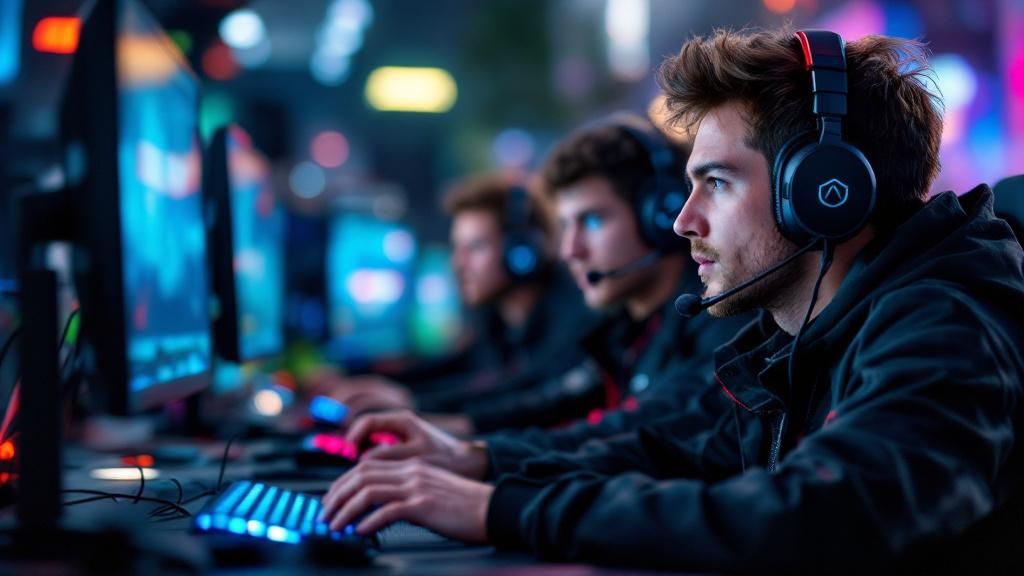
The competitive gaming landscape has experienced a remarkable transformation, with top-tier teams now committing considerable funding into cutting-edge esports equipment and equipment. From high-refresh-rate monitors to high-performance mice and precision keyboards, these hardware expenditures have become essential for tournament performance. This article explores how elite esports organisations justify expenditure on premium hardware, investigates the specific equipment delivering performance advantages, and assesses whether superior gear genuinely translates into competitive wins or merely reflects the industry’s escalating professionalism.
The Growth of Competitive Gaming Hardware
The evolution of esports hardware innovation has been deeply intertwined with the emergence of professional esports. What began as basic equipment used by dedicated players has developed into sophisticated, purpose-built equipment engineered to microsecond accuracy. Companies today allocate significant research and development resources to examining the physical mechanics of competitive gaming, yielding gear optimised for competitive settings. This technological progression demonstrates beyond gradual enhancements, but a major transformation in how the industry perceives the link between equipment performance and competitive performance.
Contemporary professional esports teams regard hardware investment as fundamental requirement rather than discretionary expenditure. The competitive landscape necessitates equipment designed to ensure reliable, stable operation under intense pressure, with players needing tools that reduce delay and maximise responsiveness. As tournaments intensify in competition and prize pools increase dramatically, organisations acknowledge that marginal gains in equipment quality can translate into considerable edge. This recognition has sparked a upward spiral wherein manufacturers keep advancing technology, teams upgrade their arsenals, and performance benchmarks rise in tandem.
Key Equipment to support Professional Players
Professional esports teams understand that premium equipment underpin of elite performance. Each piece of equipment, carefully chosen and tailored, directly influences player performance and consistency. Elite organisations allocate substantial budgets in peripherals, understanding that marginal gains in speed, comfort, and accuracy result in substantial performance benefits. Players spend countless hours practising with their equipment, rendering familiarity and quality essential. This expenditure indicates market evolution and the recognised correlation between equipment quality and championship performance.
Mice and Keyboard Devices
Gaming mice represent key expenditures for esports professionals, with teams typically purchasing numerous devices per competitor. Top-tier options offer adjustable sensitivity controls, customizable key bindings, and highly sensitive detection systems with millisecond-level precision. Professional-grade mice utilise sophisticated motion detection to eliminate lag and guarantee stable on-screen tracking across varying gameplay scenarios. Teams perform thorough evaluations to find equipment suited to specific player needs. Brands like Logitech, Razer, and SteelSeries command the esports market, with top players often securing endorsement agreements and exclusive equipment access.
Mechanical keyboards have become increasingly essential tools, delivering exceptional tactile feedback and durability versus standard alternatives. Professional players prefer switches delivering ideal actuation force and reaction speeds, generally ranging from 45 to 60 grams. Customisable RGB lighting aids visual communication during team play, whilst programmable macros streamline intricate gameplay commands. Premium keyboards withstand intense, prolonged usage throughout tournament seasons. Teams acquire various input device configurations, enabling players to adapt to different game requirements and personal preferences seamlessly.
Monitor and Display Systems
High-refresh-rate monitors fundamentally improve gaming performance, with pro esports teams mainly using 144Hz, 240Hz, or 360Hz displays. Faster refresh rates provide smoother on-screen visuals, reducing motion blur and enabling superior cursor tracking during intense gameplay. Professional teams prefer monitors with minimal latency and quick response times, usually under one millisecond. Colour accuracy and brightness consistency are important elements, notably for titles requiring exact visual differentiation. Investment in premium display technology is one of the most substantial equipment expenses, typically exceeding £500 per unit.
Display resolution and screen technology significantly influence competitive equipment purchasing decisions. Most esports competitors prefer 1080p resolutions on high-refresh monitors, emphasising frame rates over graphical fidelity. IPS and TN panel technologies each offer distinct advantages; TN panels offer reduced input lag whilst IPS panels deliver superior colour reproduction. Teams conduct comparative testing to identify best-performing configurations for particular games and individual player requirements. Curved and ultrawide displays remain less prevalent in competitive environments, as performance gains come chiefly from response time and refresh rate performance.
Investment Strategies and Fund Distribution
Strategic Budget Planning
Professional esports organisations manage hardware investment with meticulous strategic planning, committing substantial portions of their operational budgets towards gear purchasing. Teams conduct detailed financial evaluations to determine best allocation across monitors, input devices, and peripheral accessories. This structured methodology guarantees resources are allocated effectively, maximising competitive benefits whilst preserving financial sustainability. Leading organisations generally allocate between 5-15% of operational budgets to hardware acquisition, recognising that technological superiority closely connects with competitive gains and competitive outcomes.
Sponsorship and Equipment Partnerships
Many elite esports teams leverage sponsorship agreements with peripheral manufacturers to minimise equipment costs substantially. These partnerships supply teams with complimentary or discounted hardware, enabling investment in multiple backup devices and bespoke arrangements without substantial financial burden. Manufacturers benefit from visibility and reputation connected with professional teams, creating mutually advantageous relationships. Such working relationships have become increasingly sophisticated, with sponsors delivering customised hardware customised specifically for each player’s needs and specifications, improving performance and marketing value.
Sustained Return on Investment
Professional teams evaluate equipment expenditures through comprehensive performance data and tournament winnings rather than short-term gains. Superior peripherals contribute to athlete contentment, lowering player departures and preserving team consistency, which strengthens competitive consistency. Competition winnings and sponsorship income generated by high-performing organisations substantially exceed equipment costs, warranting ongoing spending. Additionally, professional-grade equipment creates company reputation, drawing in talented players and obtaining valuable partnerships, building sustainable competitive advantages and long-term profitability for esports organisations.
